We have now moved to 129 Water Lane, Holbeck, LS11 9UD! Get directions.
We’re open Mon-Sat 9am–4pm, Sun 10am–4pm. Opening times
Latest News and Info
Impact Millionaires
14th July 2026
‘It is truly inspirational that Seagulls are exploring the concept of Impact Credits linked to Social and Environmental Value, another groundbreaking initiative from this extremely impactful Social Enterprise that punches well above its weight and size.’ David AdairDirector of Community Engagement and The PwC UK Foundation.
Seagulls Impact Credits Launched
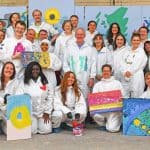
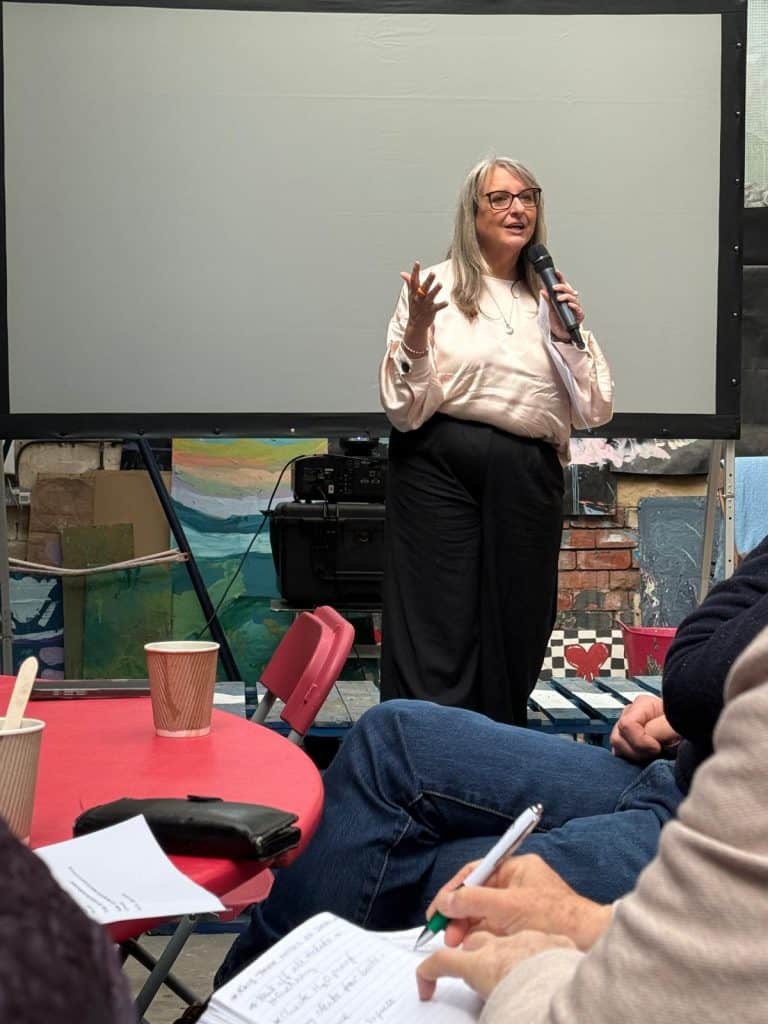
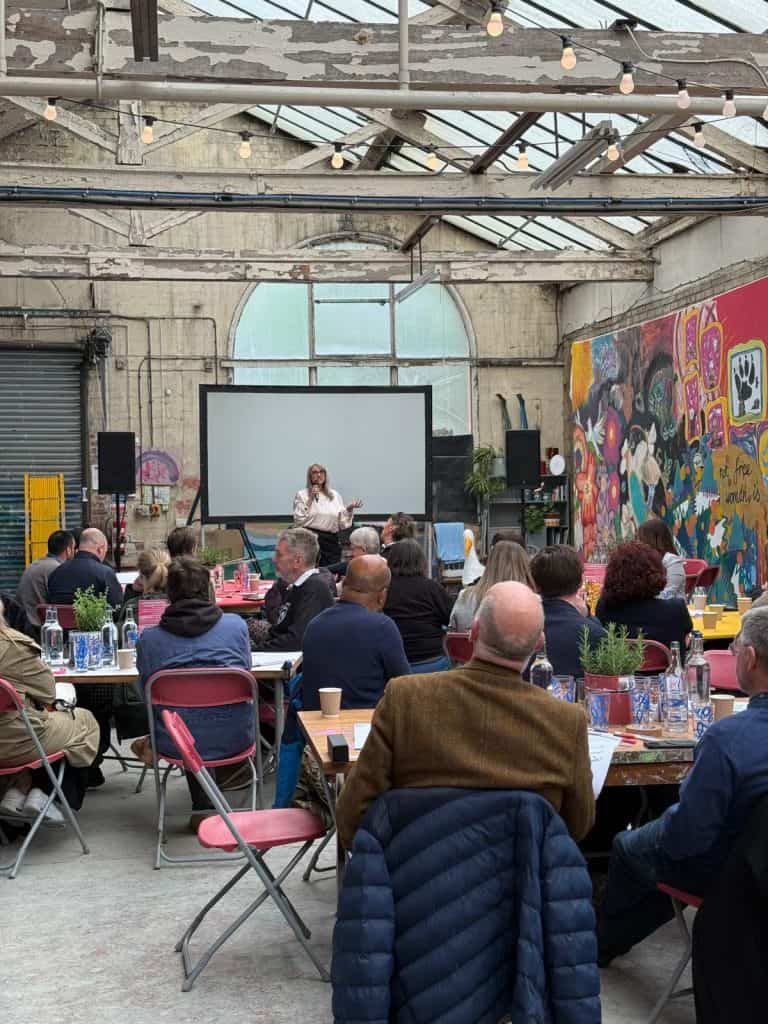
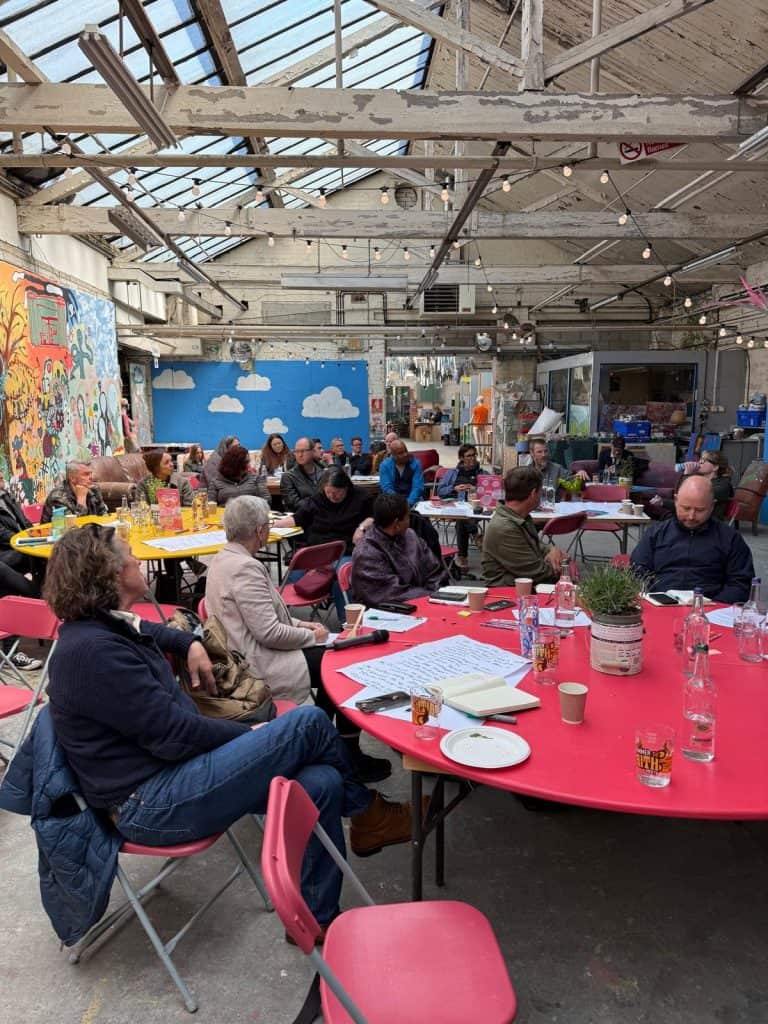
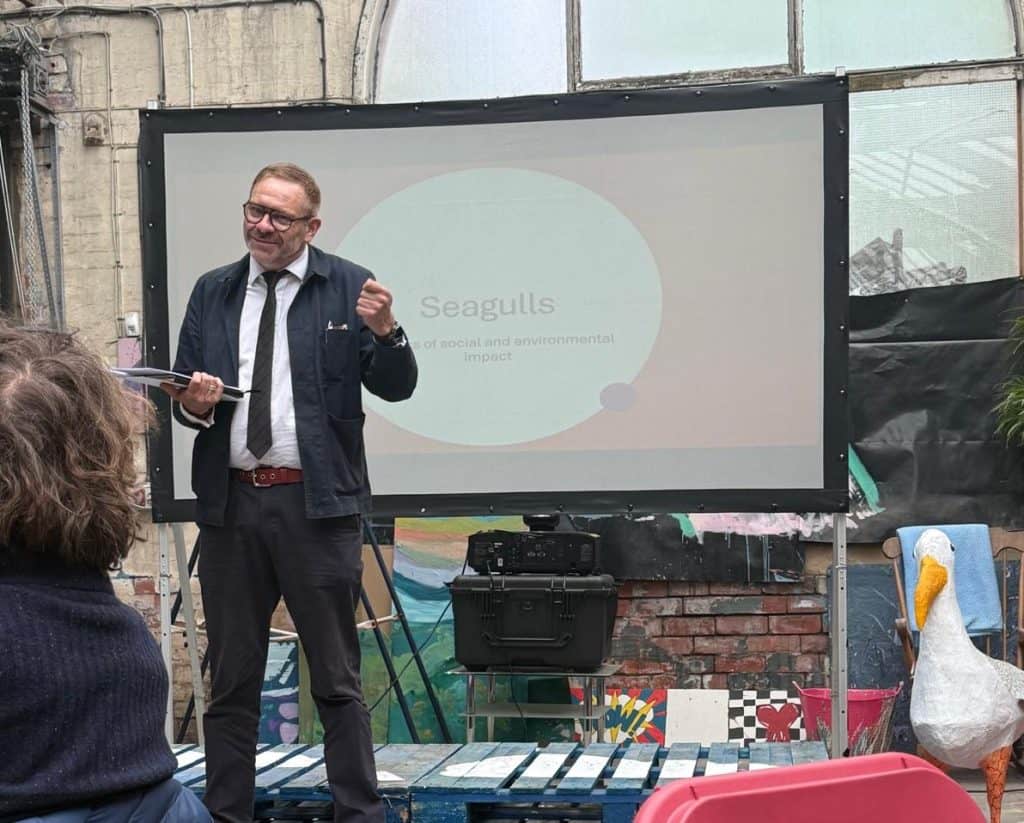
On May 14th we hosted an event at Seagulls in collaboration with Social Value Engine. The event highlighted the ongoing development of Social Value measurement as well as the work that we at Seagulls have been doing for the last 21 years to impact society, the environment and the local economy of Leeds.
Lots of people said lovely things about us and acknowledged that Seagulls is one of the most successful and progressive social enterprises in Leeds, if not the UK.
Our own social impact report calculates that in 2025 we delivered social, environmental and economic value of over £1m. Last year alone, we rescued a record 464.5 tonnes of waste paint from the LCC recycling centres across the City. Our positive impact is undeniable, and we are not short of testimonials.
Our Mission
However, like every business, we have financial pressures and recent National and Global events have seen the cost of running Seagulls escalate.
The majority of Seagulls employees have previously volunteered with us and many have a difficult backstory. We support our employees and volunteers in every way possible, guided by Maslow’s Theory that unless one’s basic needs are met, contributing to society and work are impossible. We are proud to be a Living Wage employer.
Our 3-pronged mission of People, Planet and Profit remains our mantra, and as Social Enterprise, all the money we earn is reinvested in our purposeful delivery – to reduce reusable materials ending up in landfill or incineration and to save lives through offering gainful employment.
If Seagulls was needed 21 years ago, our relevance and importance has only increased year by year as the gap between the ‘haves and have nots’ gets wider. Our increasing Social, Environmental and Economic return highlights this.
The Revenue Gap
Whilst we continue to see the numbers of customers buying reused paint increase, the gap between revenue and costs is closing rapidly. To respond to increasing need and to grow our impact further, it is urgent that we grow our revenue stream.
We recognise we are not alone as a purpose driven non-profit, and that many similar organisations are in the same place as us. The ability to apply for grant funding remains, but the likelihood of success is reduced because so many good causes are fishing in the same pool.
Over the years, we have asked our supporters and customers to contribute through Crowdfunding campaigns. Whilst these campaigns have been successful and useful for funding specific projects, we need more regular sustainable income and feel that we can’t keep returning to the same people for help.
Why should Businesses help us?
The Public Services (Social Value) Act 2012 requires public sector commissioners in the UK to consider how the services they commission and procure might improve the economic, social, and environmental well-being of an area.
Commissioners must think about wider community benefits before they start the procurement process and the Act mandates that public bodies address three pillars of well-being when evaluating contracts:
– Economic: Supporting local skills, employment opportunities, and business growth.
– Social: Improving community health, well-being, and equality.
– Environmental: Promoting sustainability and reducing carbon footprints.
Now just a minute, Where have we seen those 3 pillars before!!
The Difference in Purpose
Since establishing Seagulls, we have been successful in building relationships with a good number of large businesses. We have helped with CSR projects and have run team-building days (free and paid for). We have rarely, however, received financial donations. To us, that is no surprise, as every business needs to see a return on their investment.
Our purpose as a social enterprise is in the delivery of social and environmental value. We have no shareholders and our Board is voluntary. We do not declare a dividend and our report to our members is founded on our Impact.
We feel that, in delivery of the Public Services (Social Value) Act aims, we are much better equipped than a business that has shareholder return and profit generation as its prime purpose. All our resource is dedicated to the delivery of community impact. We do what we do very well – lots of people tell us so.
Who is Best Placed to Deliver Social Impact?
We are! The volunteers and staff who come through our doors are the beating heart of Seagulls. We have over 21 years of experience working with some of the most marginalised people in our society. We understand the barriers for participation, the chaotic lives of people living on the breadline and the need for confidence and skill building. Through our years of development and work in The Third Sector we know we are best placed to help grow people.
We are not millionaires (financially) but we are Impact Millionaires!
Our idea is to improve the potency of CSR and Corporate delivery of Social and environmental impact
We can help businesses, particularly those tendering for public contracts, to deliver impactful and meaningful social and environmental value in return for financial investment, through the issue of Impact Credits.
Our most robust data is in the amount of waste paint collected. We weigh every load that comes through our doors and convert that, using conventional and accepted proxies and measurements into £’s of environmental value.
After our LCC contract, paid to us for the collection of waste paint from the recycling centres, it costs us £665.23p to process every tonne collected.
The example calculation above illustrates the environmental value of return on an investment of £6k into Seagulls.
In return for the investment of £6k, we will issue 9 Seagulls credits (at 1 Credit per tonne saved). We also can calculate that the £6k investment will deliver £8352 of environmental value, using our social impact report results.
The Seagulls way
The flattering comments that we receive have all been generated by the action we take and the results we achieve.
We are launching Seagulls Credits because we are convinced that it is the right thing to do. We believe that supporting Seagulls as an organisation that delivers social and environmental impact as our ‘raison d’etre’ will create much more effective value for the City as a whole.
We know that the issue of Seagulls Impact Credits will provoke conversation and discussion. We welcome those discussions and will be hoping for a conversation with LCC to see how we can assist them in the delivery of their social and environmental aims.
The possibilities are endless
Wouldn’t it be great to have a system of Social and Environmental Credits for the City of Leeds?
Could Impact Credits encourage more effective collaboration between the Public, Private and Third Sector in the delivery of real Social and Environmental Value?
Could Impact Credits result in more effective CSR and Corporate Community investment?
Donate to make a difference over the next 20 years
Donations help us carry on the valuable work we do and we appreciate any amount that you’re able to give. If you’d like to support us in another way, come roll up your sleeves and consider volunteering.
Corporate volunteering, Social Value volunteering, wellbeing workshops, team building, call it what you will our corporate engagement packages offer all of the above.
What we offer
We offer 2 different ways for your Company to engage. Your engagement with Seagulls is a valuable source of income for our Social Enterprise and in contributes to our social value.
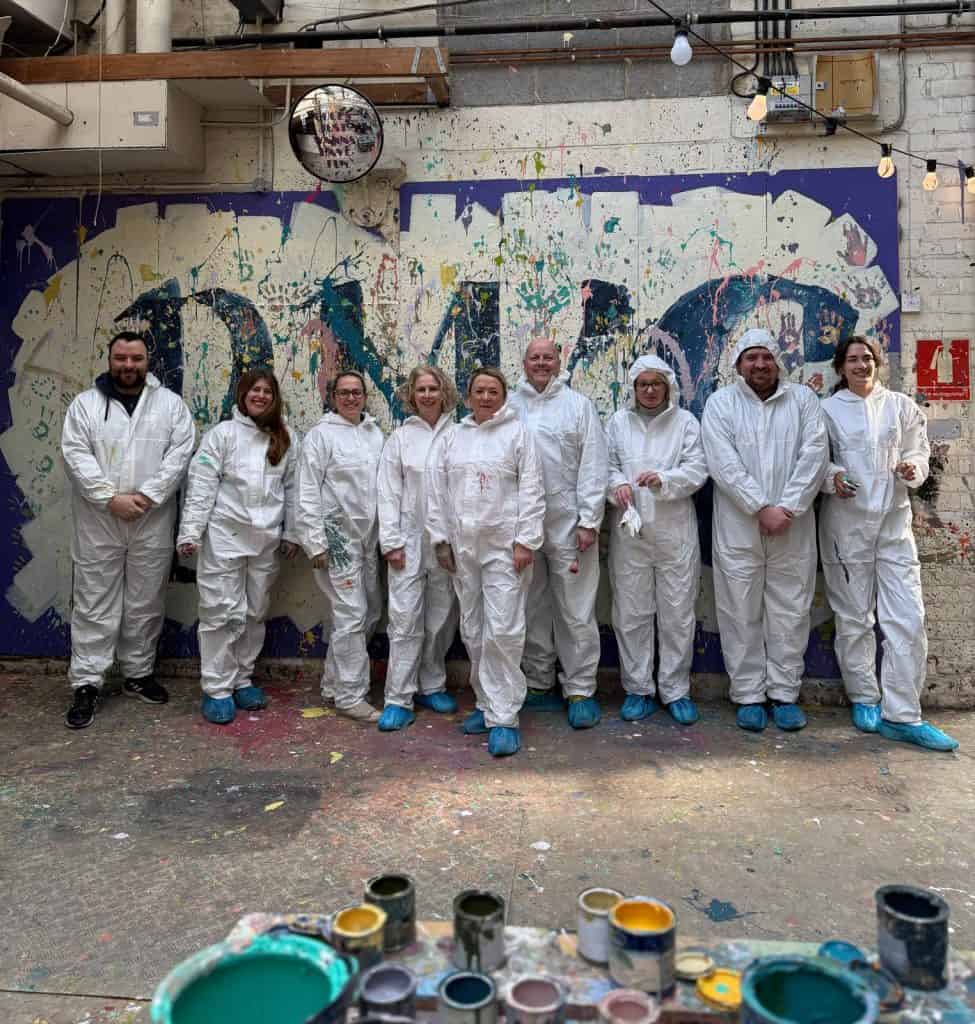
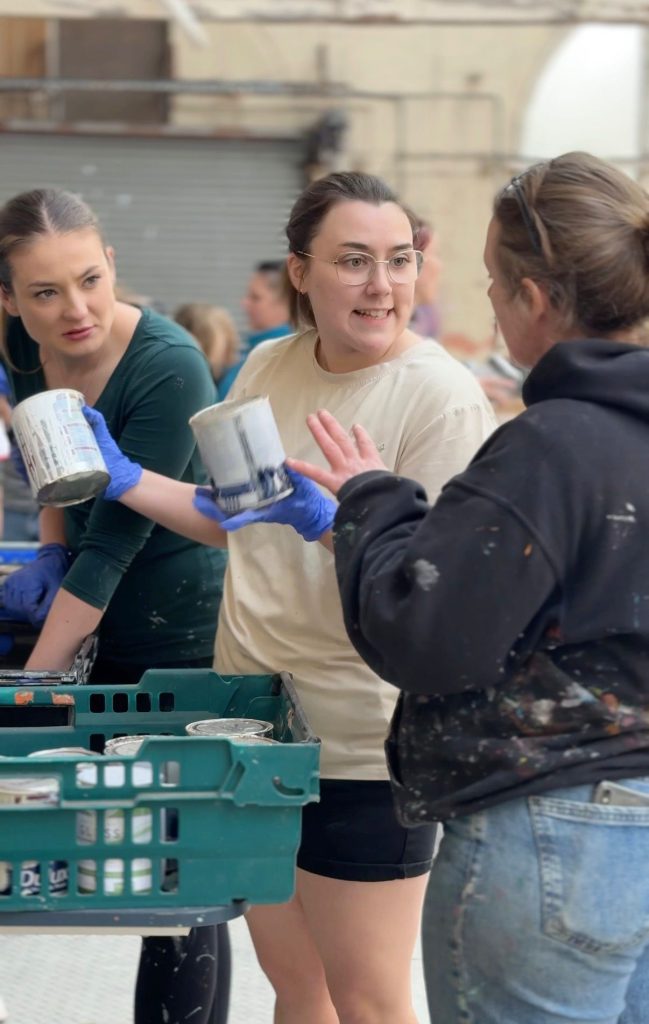
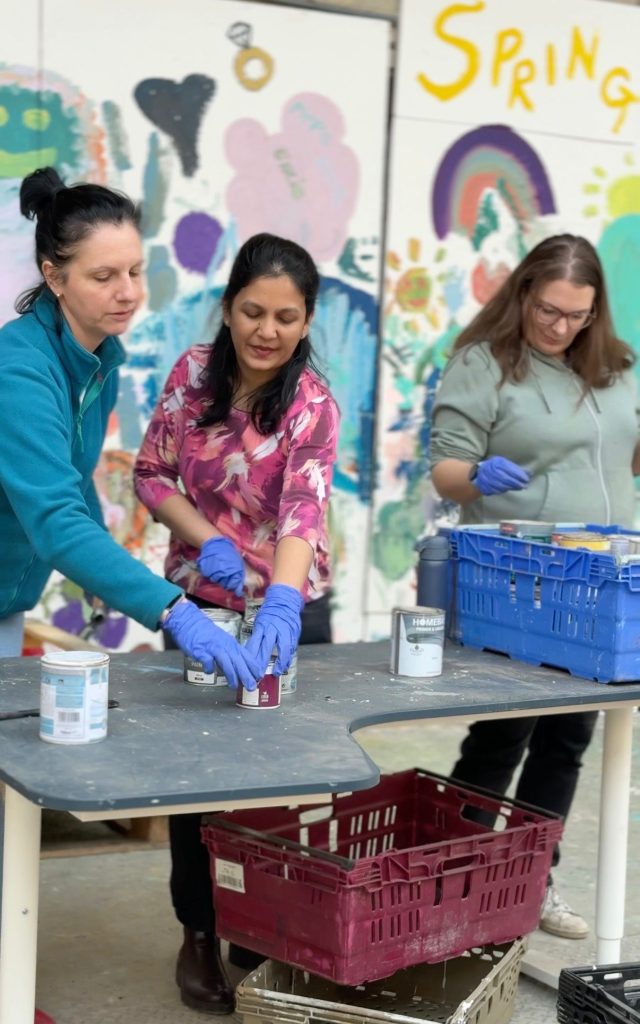
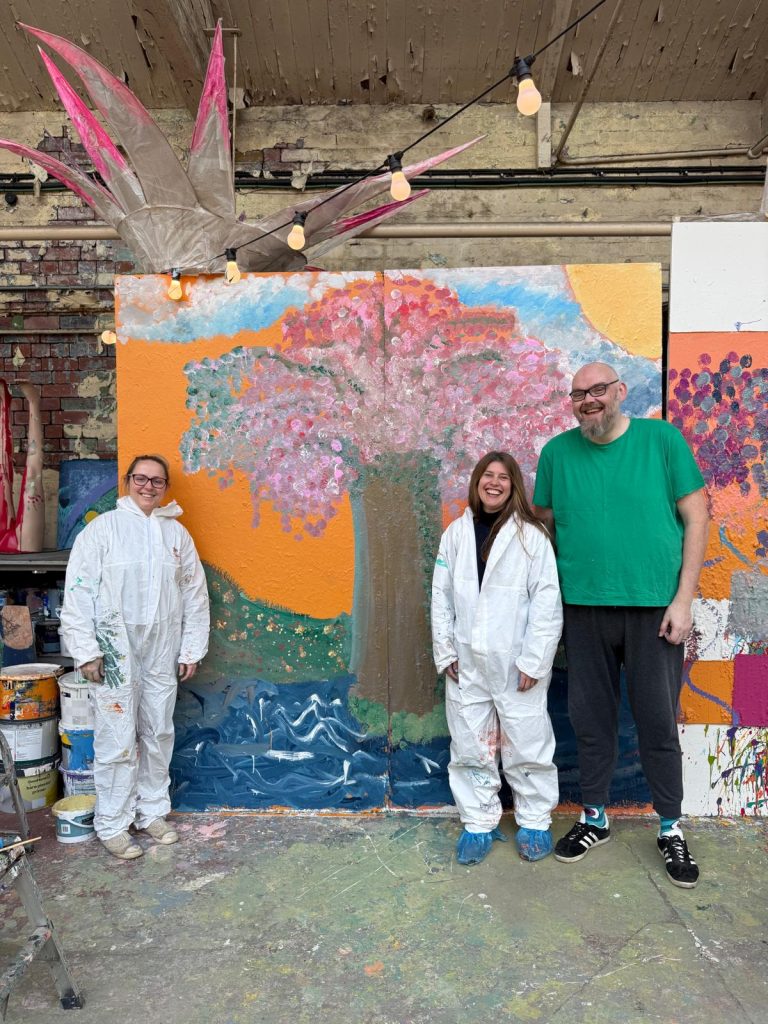
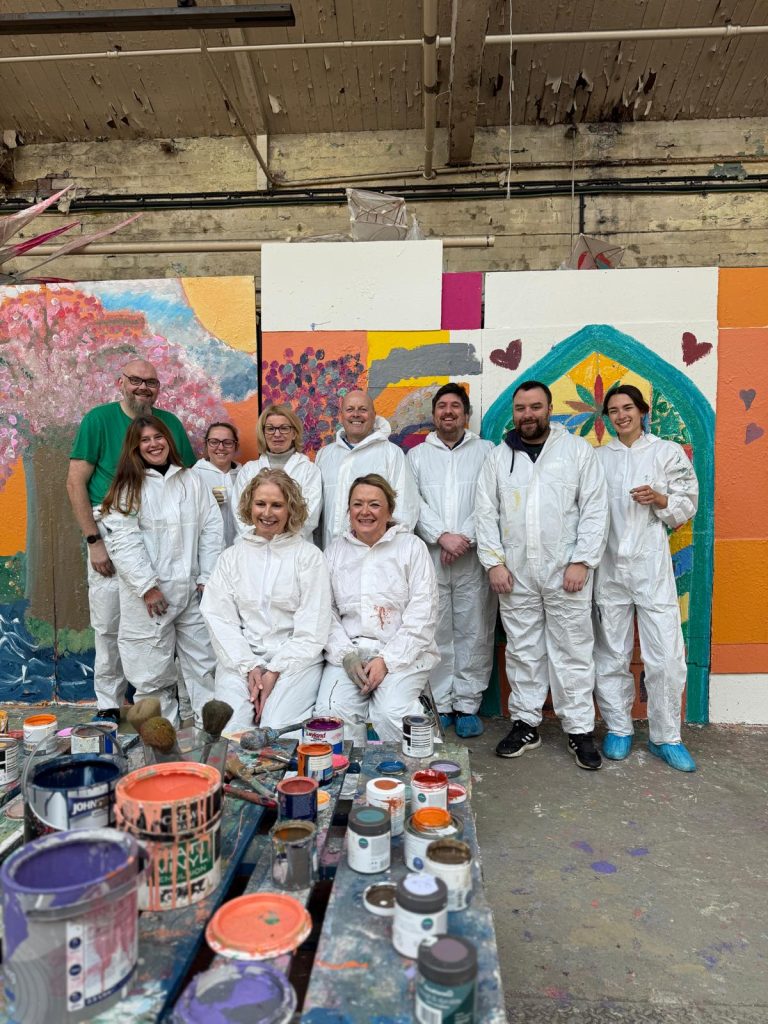
Help us and have fun. In this session your team will start by having a behind the scenes tour of Seagulls. You will then help us sort and categorise paint (no experience needed) and your time will end with an hour or so playing with paint.
½ day (3 hours)
Minimum of 10 people and maximum of 25. £35 + VAT pp.
Overalls and soft drinks included. Lunch can be eaten on site.
Play with Paint Team Bonding
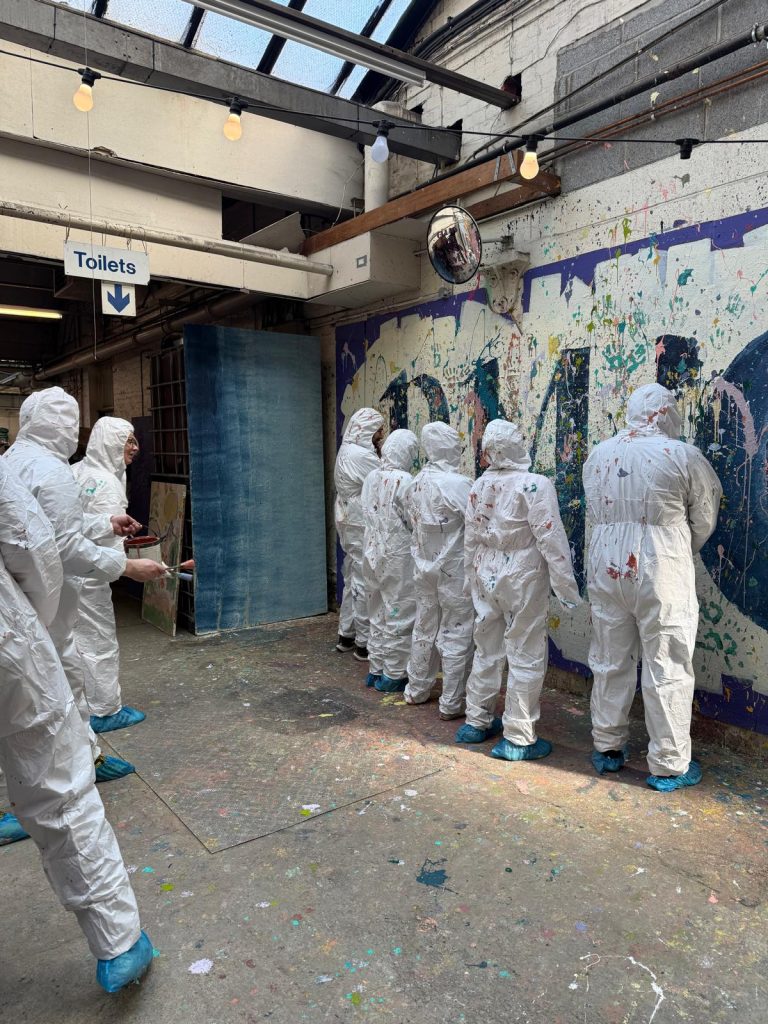
Have fun with paint. In this session your team will start by having a behind the scenes tour of Seagulls. You will then be let loose on our creative walls where anything painty goes. Work as a team to paint a mural or free flow the designs and come together to flick paint on each other. This experience is all about letting go of your inhibitions and enjoying the flow of paint. No creative ability required.
2 hours
Min of 10 people and maximum of 30 people. £30 pp + VAT.
Feedback
‘I just wanted to say a big thank you to you and the Seagull’s team for hosting us. Everyone had a brilliant afternoon, and so many people have commented on how much they enjoyed the activities and the opportunity to make a small difference. We really appreciate the time and effort you put into planning the day and making everything run so smoothly – and for making us all feel so welcome.’
‘It was great to meet you in person, learn more about the enterprise, and get involved in the activities.’
‘I’ve had excellent feedback on the experience and the afternoon exceeded expectations.’
Contact us
For more information or a chat about your team needs please contact Cat.
cat@seagullsreuse.org.uk
Donate to make a difference over the next 20 years
Donations help us carry on the valuable work we do and we appreciate any amount that you’re able to give. If you’d like to support us in another way, come roll up your sleeves and consider volunteering.
On May 14th we hosted an event at Seagulls in collaboration with Lucinda Yeadon and Social Value Engine. The event highlighted the ongoing development of Social Value measurement as well as the work that we at Seagulls have been doing for the last 21 years to impact society, the environment and the local economy in Leeds.
A Place for Purpose was a gathering of charities, social enterprises, and purpose-led organisations in Leeds and Yorkshire who want to move from good intentions to measurable outcomes.
Lucinda brings over seven years of hands-on social value practice, including £11 million in measured social value through her work at CEG, and a background as former Deputy Leader of Leeds City Council. She is a powerhouse of expertise and connections for Social Value. Seagulls feel very lucky to have her as a key supporter and advocate.
Attendees took part in a collaborative workshop to build a shared measurement framework for the region (more on this to follow).
Growth, resilience and security
The days Keynote Speaker was the brilliant Peter Holbrook CBE. Peter is the CEO of Social Enterprise UK, the UK’s national body for Social Enterprise. Peter campaigns, advocates, supports and enables Social Enterprise’s (and the sector) to grow and respond to the times. We were very grateful for his time and passion at the event.
Peter delivered an impactful speech that summed up the purpose of the day and gave valuable insight into the National picture. He has given us permission to publish the speech and so we recommend you grab a cuppa and have a read. Thank you Peter (and no we didn’t pay him!)
Full speech transcript
Good afternoon, everyone.
It is a real pleasure to be here in Leeds, and a particular pleasure to be here at Seagulls.
And let me begin by saying thank you to Cat Hyde. Cat is one of those people who slightly ruins the rest of us for excuses. She saw waste, and built value. She saw people being pushed to the edges, and built routes back in. She saw environmental damage, social injustice and economic failure sitting in the same paint tin, and rather than writing a strategy paper called “Towards a More Integrated Framework for Pigmented Circularity”, which, let’s be honest, someone somewhere absolutely would have commissioned, she got on with it.
That is Seagulls.
Paint with purpose.
Not paint with a corporate social responsibility appendix. Not paint with a commemorative tote bag. Paint with purpose. Paint that has been rescued, remixed, re-used and returned to life. Paint that says something about the kind of economy we need: practical, rooted, creative, inclusive, and frankly a great deal more colourful than the one we have been offered.
Today’s title is “Growth, resilience and security.” And I want to frame those three words around a phrase we have been using at Social Enterprise UK: the backbone of Britain.
Because when people talk about the backbone of Britain, they often mean something like tradition, grit, duty, small businesses, local institutions, everyday decency, and people getting on with things without fuss. Which is a very British phrase, “without fuss.” It usually means someone has quietly done the work of five departments, two ministers and a procurement framework, and then apologised for the biscuits.
And, all of that matters.
But if we are serious, the backbone of Britain is not a slogan. It is not a Union Jack on a lectern. It is not a stock photo of a hard hat next to a cup of tea. It is the organisations that hold communities together when markets fail, when public systems are stretched, and when people are told, yet again, to wait their turn.
It is the youth worker who notices the child no one else has noticed.
It is the community business keeping a high street alive.
It is the care provider paying people properly because dignity cannot be delivered by an exhausted workforce on poverty wages.
It is the social enterprise creating work for people who have been written off.
It is a place like Seagulls, taking something that was going to be wasted and turning it into affordable materials, skills, confidence, jobs, creativity and belonging.
That is not soft. That is not marginal. That is not a “nice to have.”
That is national resilience.
And we need to say so with more confidence.
Let me start with growth.
Growth has become one of those words in public life that everyone uses, but very few people define. It is wheeled out in speeches like an elderly relative at a wedding: everyone is pleased to see it, no one is quite sure where it should sit, and by the end someone will probably claim it has solved the seating plan. And if you ask what kind of growth, there is often a pause, the kind of pause you get when someone has just realised their entire economic policy is basically “more”.
But growth matters. Of course it does. We need stronger local economies, good jobs, rising productivity, investment, enterprise and ambition. The question is not whether we need growth. The question is: what kind of growth, for whom, and at what cost?
Because growth that extracts from communities is not the same as growth that roots wealth in them.
Growth that burns through people is not the same as growth that develops them.
Growth that treats nature as an accounting error is not the same as growth that respects the limits of the planet.
Social enterprises exist to answer that question differently.
Across the country, social enterprises are proving that business can be commercially serious and socially committed at the same time. In the latest State of Social Enterprise evidence, 48% of social enterprises reported increased turnover in the previous 12 months, compared with 36% of small businesses. In the same evidence base, 37% increased staff numbers, and 46% expected to employ more people in the next year.
That matters. It matters because these are organisations trading in tough markets, in tough places, often with tougher missions. They are not growing by ignoring disadvantage. They are growing by tackling it.
And that is what makes places like Seagulls so important.
The conventional economy looks at leftover paint and sees a disposal problem. Seagulls looks at it and sees a supply chain, a shop, a workshop, a volunteer opportunity, an environmental intervention, a route into employment, a reason for people to gather, and, quite possibly, a shade of blue that no human being could have planned but somehow works perfectly in a downstairs loo. That is the difference between a system that says “bin it” and a community that says “hang on, this might still have a life.”
That is entrepreneurial insight.
It is also economic common sense.
At the start of 2025, the UK had an estimated 5.7 million private sector businesses. SMEs made up 99.85% of them, employed 16.9 million people, and generated £2.8 trillion in turnover. So, when we talk about the future of the economy, we are not only talking about the FTSE 100, the City of London, or whatever the Chancellor has found behind the fiscal sofa this week. We are talking about the millions of enterprises that make places work.
The challenge is that too much of our economic conversation still behaves as if purpose is a drag on performance.
It is not.
Purpose can be a discipline. It can sharpen choices. It can build trust. It can attract staff, customers, partners and investors who want to know that their time and money are doing something useful in the world. Not “purpose” as in the word you put on slide two before behaving exactly as you did before, but purpose as in the thing that changes what you do on a wet Tuesday when nobody is applauding.
At Seagulls, purpose is not painted on after the business model has dried. It is mixed in from the start.
And that brings me to resilience.
Resilience is another word that has had a hard few years. It has been asked to do a lot of heavy lifting. Sometimes it is used to mean “communities doing unpaid crisis management because systems have failed them.” Sometimes it means “please absorb this shock quietly while we form a taskforce.” And sometimes it means “we have cut the safety net, but we do admire your balance.” At that point, resilience stops being a virtue and starts sounding like a very polite mugging.
That is not good enough.
Real resilience is not just the ability to endure damage. Real resilience is the capacity to adapt, to organise, to care, to trade, to learn, and to build something stronger before the next crisis arrives.
And social enterprises are resilience institutions.
They are close enough to communities to understand what is changing. They are enterprising enough to respond. They are values-led enough to protect the people who are usually treated as expendable. And they are practical enough to know that hope without delivery is just a very nicely worded poster.
Look at Seagulls’ own impact.
In 2024 alone, Seagulls saved nearly 440 tonnes of paint from landfill. Volunteers contributed 4,325 hours. And 99% of workshop attendees said they would return.
Those numbers tell us something important.
They tell us that environmental action can be tangible. You can see it stacked on a shelf. You can stir it. You can put it on a wall.
They tell us that volunteering is not a decorative extra. It is part of the social infrastructure of a place.
They tell us that people do not only need services. They need agency, creativity, relationships and the chance to be useful.
And they tell us that when you build something with integrity, people come back.
There is a national story here too.
The Royal Society of Chemistry has estimated that UK households are sitting on more than 50 million litres of unused paint. Every year, the UK generates around 55 million litres of waste decorative paint. And only around 2% is currently reused, recycled or remanufactured, with the rest landfilled or burnt. Paint is one of the few policy areas where “watching it dry” would actually be an improvement on what currently happens next.
Now, even by British standards, that is an absurd sentence.
We are a country that can organise a four-hour televised debate about whether a sandwich is lunch, tea, or an attack on regional identity. Yet somehow, we have normalised a system in which millions of litres of usable material are left in cupboards, garages and sheds until they become a problem someone else has to pay to dispose of. That is not a circular economy. That is a national collection of guilty utility rooms.
Seagulls shows there is another way.
Not in theory. In practice.
This is circular economy with sleeves rolled up. It is not a diagram with arrows chasing each other around a PowerPoint slide. It is people collecting, checking, mixing, selling, learning and creating.
And it is exactly the kind of practical innovation Britain needs.
Because resilience is not built by nostalgia. It is built by capability.
It is built by organisations that can take shocks and still create value.
It is built by people like Cat, and teams like this one, who make something hopeful without pretending the world is easy.
That takes us to security.
Security is often spoken about in narrow terms: borders, defence, policing, energy supply. Those things matter. But they are not the whole story.
For most people, security is also whether their community has somewhere to go.
Whether their child can find support.
Whether work is decent.
Whether the high street has life in it.
Whether the air is breathable, the home is warm, the rent is payable, and the future feels like something more than a threat arriving in instalments.
Security is belonging. Security is trust. Security is the knowledge that if things get difficult, you are not on your own.
And that is why the civic and social sector leaders in this room matter so much.
You are not operating at the edge of national life. You are helping to hold its centre.
The phrase “backbone of Britain” is not just a compliment. It is a challenge.
If social enterprises, charities, community businesses and civic institutions are part of the backbone of Britain, then we have to treat them like backbone. We cannot keep asking them to carry more weight while giving them less support, less certainty and less respect.
A backbone needs nourishment. It needs strength around it. It needs systems that understand its importance.
That means better commissioning.
It means procurement that values social and environmental outcomes, not just lowest unit cost and the magical thinking that quality will somehow survive a race to the bottom. Lowest cost procurement often has the moral imagination of a supermarket self-checkout: technically functional, frequently baffled, and somehow always asking someone unpaid to fix the problem.
It means finance that fits the realities of mission-led business.
It means public policy that sees social enterprises not as a footnote to growth, but as one of the ways growth becomes legitimate.
And it means local leadership that is prepared to back the builders.
So, if national and local government want to make this change real, there are four practical priorities.
First, put social value into the hard wiring of public spending. Not as a warm paragraph near the end of a tender, but as a serious test of how public money builds local wealth, creates decent work, reduces waste and improves lives. If public money is being spent, it should strengthen the public good.
Second, make it easier for social enterprises to access the finance and premises they need to grow. That means patient capital, better use of public and community assets, meanwhile use of empty buildings, and investment that understands that mission-led organisations often create value before they can easily monetise it.
Third, build circular and social enterprise into local economic strategies. Every council and combined authority should be asking: what are we throwing away that could become local value? What contracts could create jobs for people facing barriers? What high streets, industrial estates and community spaces could become platforms for purposeful enterprise?
And fourth, treat social enterprise as part of economic security. Bring social enterprises into resilience planning, net zero delivery, skills strategies, health creation and neighbourhood renewal. Not as consultees after the decisions have been made, but as partners in designing the answer.
These are not extravagant ideas. They are practical, affordable and, in many places, already happening. The task now is to move them from exceptional examples into normal practice.
Because if we want growth, resilience and security, we should invest in the people already producing all three.
We should back the organisations creating jobs for people facing barriers.
We should back the businesses cutting waste and carbon.
We should back the community anchors that keep people connected.
We should back the entrepreneurs who know their place, know their mission and know that profit is not the enemy of purpose, but should be made its servant.
Cat and the Seagulls team have been doing this for years.
Long before circular economy became fashionable, they were circular.
Long before ESG became a boardroom acronym capable of making even a spreadsheet look nervous, they were doing environmental, social and governance work in the real world.
Long before “levelling up” became a slogan, a department, a row, a rebrand and then a sort of national shrug, they were taking practical action to make opportunity more visible and more reachable in this city.
That deserves celebration.
But it also deserves replication.
Because the lesson of Seagulls is not simply “isn’t this lovely?”
The lesson is: this works.
It works environmentally, because reuse reduces waste and cuts demand for new materials.
It works socially, because people who are invited into purposeful activity often rediscover confidence, connection and direction.
It works economically, because affordable products, local trading and job creation keep value circulating.
And it works democratically, because places like this rebuild trust from the ground up.
Trust is not restored by press release. Trust is restored when people see promises made visible.
A shop that helps you afford to decorate your home.
A workshop that makes you feel welcome.
A volunteer project that gives you a role.
A social enterprise that says the planet matters, and then proves it by saving hundreds of tonnes of paint from waste.
This is what hope looks like when it has a stockroom.
And I think that is the heart of today.
Hope is not optimism. Optimism is a mood. Hope is a practice.
Hope is what you do when the evidence is mixed, the money is tight, the policy environment is uncertain, and the paint tins are, frankly, everywhere. Hope is not a scented candle. It is a rota, a van, a ledger, a volunteer shift, a difficult conversation and, occasionally, a lid that absolutely refuses to come off.
Hope is deciding that waste is not inevitable.
Hope is deciding that people are not disposable.
Hope is deciding that places are not condemned to decline because a spreadsheet in another city has failed to recognise their worth.
Hope is Cat Hyde, around a kitchen table, with others, asking: what can we do with what we have?
And then doing it.
So my message today is simple.
If we want Britain to grow, we need enterprises that grow value in the places where people live.
If we want Britain to be resilient, we need organisations that can turn crisis into capability, waste into resource, and isolation into community.
If we want Britain to be secure, we need to strengthen the civic, social and economic institutions that give people confidence that the future can still be shaped.
That is the backbone of Britain.
Not abstract. Not sentimental. Not waiting for permission.
It is here in Leeds.
It is here at Seagulls.
It is in the volunteers, staff, customers, partners and supporters who have helped build this place.
It is in every organisation represented in this room that refuses to choose between enterprise and justice, between commercial discipline and human dignity, between environmental responsibility and economic ambition.
And it is in the work still ahead of us.
So let us leave here not only encouraged, but committed.
Committed to telling this story with more confidence.
Committed to backing social enterprises not as worthy exceptions, but as vital engines of the economy we need.
Committed to building growth that is shared, resilience that is real, and security that people can feel in their daily lives.
And committed to remembering that sometimes national renewal does not begin with a grand announcement from Westminster.
Sometimes it begins with a half-used tin of paint, a stubborn belief in people, and a leader like Cat Hyde saying: “We can do something better with this.”
Thank you.
Donate to make a difference over the next 20 years
Donations help us carry on the valuable work we do and we appreciate any amount that you’re able to give. If you’d like to support us in another way, come roll up your sleeves and consider volunteering.
Recycle Now™ is the national recycling campaign for England and Northern Ireland, which aims to motivate more people, to recycle more of the right things, more often.
Recycle Week is Recycle Now‘s flagship annual event, celebrating recycling across the nation. It’s the one week of the year where retailers, brands, waste management companies, trade associations, governments and the media come together to achieve one goal: to galvanise the public into recycling more of the right things.
This year’s theme is ‘Let’s Get Real’, and will challenge perceptions and myths around recycling, and target contamination to improve recycling behaviours.
Why it’s important to us?
Recycle week symbolises the importance of recycling through the delivery of crucial campaign moments and ongoing citizen interaction.
The organisation works to educate and inspire citizens to modify their behaviour in recycling, just like we do! It seems the perfect time to remind you all of the fantastic accomplishments Seagulls have reached through recycling:
Saved and reused over 4 million litres of paint, equaling 11 million kg or 11,000 tons of CO2e. This is the equivalent of planting 68 million trees.
Recovered 75,000 kg of scrap metal tins and 123,944 kg of liquid oil that has been recycled.
Provided a social value of £1.9 million to the city of Leeds in 2018
Created a unique and people-centred organisation; learning as we go along and responding to local needs, all through the art of recycling.
We can’t thank our loyal customers enough for working with our organisation to make the environment a better place. Now let’s double these stats!
Winners: Environmental Social Enterprise in Yorkshire & Humber ’22 goes to Seagulls
24th September 2022
What a brilliant week!
Social Enterprise Yorkshire & Humber hosted their 2022 awards. The event took place at The Shay Stadium, Halifax, and we were lucky enough to be shortlisted for the Environmental Social Enterprise award.
We sat in the final with our friends over at Zero Waste Leeds. They do amazing work helping make Leeds a zero-waste city by 2030.
Also, YORGreenCic, who supports communities to create and manage green space, and meet future demands through multi-functional land use. To be up against such inspiring organisations was truly amazing, and a huge well done to both for getting into the final.
The award ceremony was full of selfless organisations and people, which made us super proud to surrounded by them.
After our win, the Judges said: “They have made a huge impact on the environment and their commitment, tenacity, creativity and dedication is what has enabled the to succeed.”
The comments where truly humbling and the recognition is marvellous.
So, a huge thank you to Social Enterprise Yorkshire & Humber, and to Ali Ward for organising such a fantastic event.
Cheers to Seagulls being the Environmental Social Enterprise in Yorkshire & Humber 2022!
Need to paint your decking?
18th August 2022
Ok, so we covered how to paint your garden gate. Now let’s talk about getting your decking ready for a bank holiday bbq!
For those who have some lovely decking in your garden, you already know what a great addition it is. Perfect for dining, socialising, sunbathing or BBQs.
However, the trusty British weather probably means you don’t get to use your outdoor space as much as you’d wish. It also means that it will most likely need a bit of TLC after a long winter.
Leave your decking to dry for 24 hours minimum.
1. Cleaning your decking
So we are going to start by giving your decking a good clean. It’s recommended that you keep it tidy all year round, to save a big clear-up once a year. Just a weekly brush should do!
Get yourself a stiff outdoor brush and brush away any debris.
Now it’s clean, it’s time to apply Decking Cleaner. Unfortunately, Decking Cleaner is hard to come by at Seagulls and when we get it, it’s gone within the hour!
You should apply the cleaner directly onto the wood and use your scrubbing brush. Then jet wash this off, leaving it to dry for at least 24 hours. (Make sure you consider the weather; you don’t want to do this and then it rains!)
2. Sanding your decking
You now have a clean deck, but you need to make sure there is no leftover paint! (If you are painting over/touching up skip over this step)
Firstly, take a wire brush and use light sweeping strokes to remove any old paint.
Then you can go ahead with your scraper for that tougher paint. Scraping rarely removes all the paint from the existing deck, and it’s not meant to. After scraping away loose paint, it’s likely the wood will still have plenty of stuck-on paint. However, if it’s not peeling the new paint will still stick.
You can now begin to sand the decking. This smooths out the edges allowing for a fresh coat to be applied. If you have a power sander handy- brilliant! If not, try using a sanding sponge. Before sanding, use a hammer and nailset to countersink any nails that might be sticking up.
3. Treating & painting the wood
It is up to you what tools you use for this project, whether it be a brush, a paint pad or a roller. Make sure you apply your Frog Tape before cracking that tin of paint open though.
What paint should you use?
Here is where we come in handy.
We have everything you will need to bring your decking back to life, if you know exactly what you want, it will be best for you to ask a member of staff to show you where everything is- we have paint in abundance. Don’t be afraid to ask for help too, that’s what we are here for!
– Decking Preserver
We have several different types of Wood preservers. Cuprinol & Ronseal are the most popular at Seagulls, and the best in our opinion! It comes in various different colours, including Dark Browns, Green & Clear.
– Decking Paint
Our Decking Paint is again mainly Cuprinol & Ronseal. We occasionally get the likes of Wickes, Barrentine & Ever Build, though they are rare. Again, they come in colours such as Green, Clear, Oak, Pine, Timber, Cedar, and Mahogany.
You will need these materials too:
Painter’s tape
We sell Frog Tape in-store, offering 2 different types. The Green s the most common and better of the 2, it is multi-surface & will cost you £8.50. The Yellow is for delicate surfaces and we charge £9 for a roll of that!
Dust Sheets
We sell 12-foot by 12-foot dust sheets for just £2.50 each!
Scraper
We sell scrapers instore for £2.50
Scrubbing Brush
Unfortunately, we don’t have scrubbing brushes in stock at the minute.
Click here for a list of materials we sell in-store.
Seagulls Summer Market: What to expect
10th July 2022
It’s officially time! We have booked the weather, and are dusting off the bunting and sweeping the yard ready to welcome our stallholders and visitors for what looks to be our best market yet.
The response to our call for stallholders has been amazing. We have a lot of regular stallholders and also many new faces (which we are thrilled about!).
So, let’s talk to stallholders. Have a scroll and find out who and what to expect at the market, I’d say we have a bit of everything!
Both days
Goods In General
Goods in General is a Seagulls Market regular! They concentrate on vintage, industrial and salvaged. All items are practical, quality items saving them from landfills and ensuring they won’t be left to gather dust.
Biddy and Bear are a unisex children’s clothing company, inspired by the lack of good clothing for children on the high street. They source unique clothing ethically, of course!
Leeds-based jewellery you can’t say no to! Valmont Studio’spieces are mainly in enamel, silver and copper; heavily influenced by My work sculpture and the abstract form. The nature of the enamelling process makes each piece unique.
Elena Rubiu is a Sardinian ceramist based in Leeds. Look at these pieces! Elena also puts on a variety of ceramic workshops so you can learn her skill.
Pennyis an artist in Leeds. She has been studying and producing Art and Crafts for over 20 years, including oil painting, photography (film & digital), wood carving, fine art and of course pottery.
https://www.instagram.com/p/CbFWGVUMVd9/
Saturday
March Makes
March Makes is a small family-run business, that makes a variety of letterbox gifts and care packages. You may also find some unique jewellery pieces on their Etsy too!
Halfpenny Ink is run by Alice Halfpenny, an Artist and Graphic Designer.
Inspired by nature and all that surrounds us, Alice creates art that celebrates its beauty and diversity. All work is created using a pointillism technique with fine liner pens. Brilliant!
Alice Albentosa creates ethical silver jewellery for conscious women. Expect to find sterling silver adjustable rings and so much more.
https://www.instagram.com/p/CcnvaMlMC8B/
Scarborough Rd Studio
Natalie Knight is an Illustrator, Lino printer and Crafter based in West Yorkshire. Look at these earrings! What a great addition to our Summer Market.
Soft and Squiffy is run by Leah, who upcycles her children’s old clothing, or old clothes of her own, and gives them a new lease of life. The filling of her cushions, like the one shown below, is used from recycled plastic bottles.
Ink and Bear are run by Sophie Greenwood, who makes colourful, simple screen prints inspired by nature and travel. She also delivers creative workshops in and around Leeds.
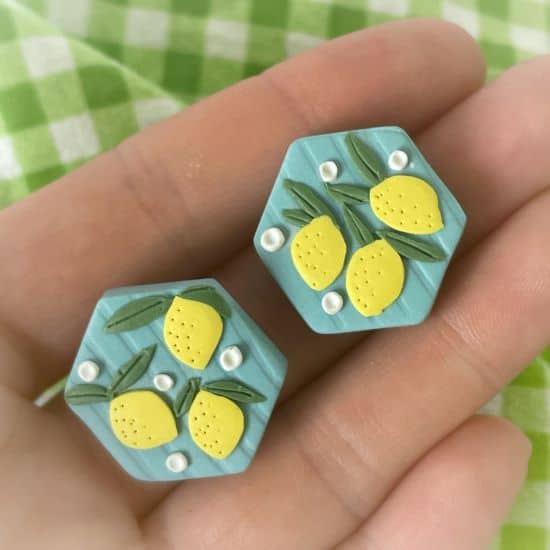
Nat is Chief Clay Lady at Upsydaisy Craft! In Nat’s words ‘Getting a fresh bag of clay and turning it into some colourful jewellery through the magic of the kiln is always amazing, opening the kiln after a day of it heating my house is a lot of nervous excitement!’
Rebecca is the creator behind the genius Black Violet. Her pieces specialise in Concrete, Moss, Crystal Jewellery & Homeware, what an impressive variety!
Sarah is an avid traveller, photographer and blogger. Inspired by our diverse, natural and cultural world she offers colourful prints, canvasses and jewellery. Wow!
Roisin Smith
Roisin Smith makes her own jewellery, and they are brilliant. Perfect for your summer holidays!
Food
The Slice Is Right
Why not treat yourself to a slice of pizza for lunch! The Slice Is Right is a Leeds-based mobile pizza caterer. They specialise in traditional Neopolitan pizzas, with plenty of options (including vegan!)
Finished your pizza, it’s time for something sweet! Melts are rocky roads, redesigned. Think of your favourite chocolate bar stacked with its best friends (and they are all vegetarian). We can’t wait to try!
Jita’s Green Sauce sells authentic Indian chutney, and it sounds delicious, made with fresh mint, coriander, green chillies, ginger, garlic and a little lemon juice for tanginess.
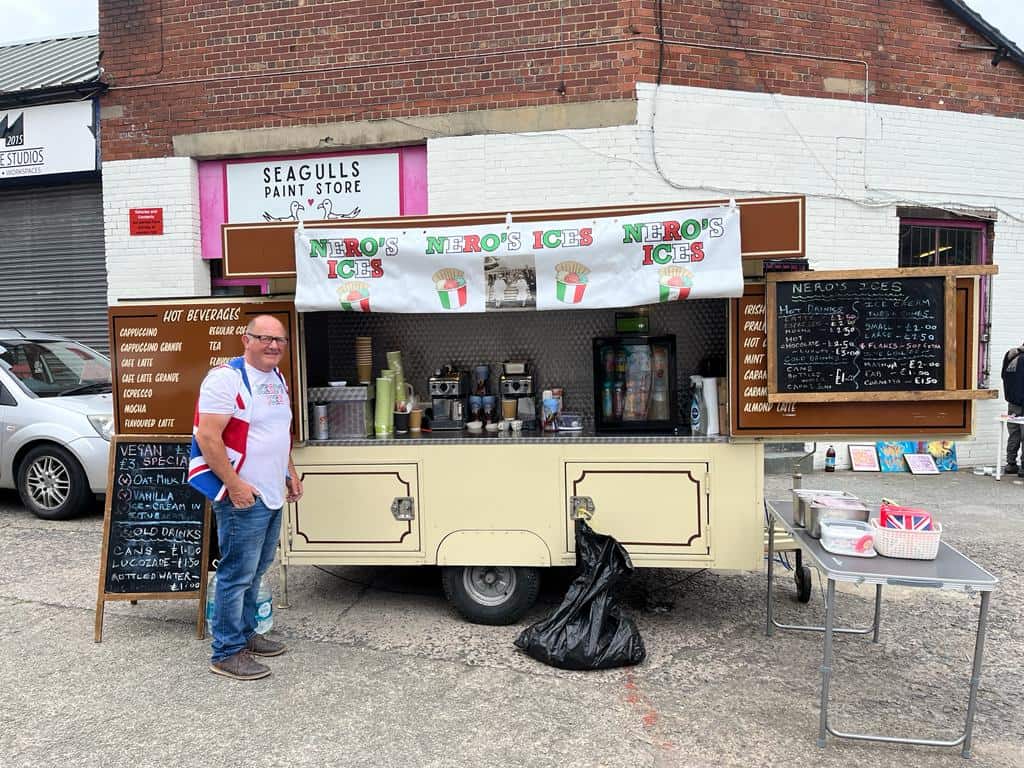
Gary will be serving hot drinks and ice cream all weekend. What more could you ask for!
We look forward to seeing you all there! the weather is looking good, and we cant wait to see some familiar faces.
Seagulls x
Our biggest paint order…EVER!!
7th July 2022
Some exciting news from us over at Seagulls… We received our biggest paint order to date!
What was the order?
It was from a lovely lady called Nicole-Rose from Surrey. Her order was for 25 x 10L bespoke paint colours. She also got some brand new white matt, silk, gloss, undercoat and floor paint.
Nicole’s budget was set at £800 although the order came to £842.50! But for an order of this size, we obviously let her off the £42.50. This was still the biggest paint order we have ever received and the team were eager to get working on it!
We knew that Nicole’s order was a bargain, so we broke it down to compare with leading brands. We just knew this would make a brilliant price comparison.
Price Comparison
Through online research, we found that 10 litres of a bespoke colour from Dulux would cost approximately £150.
So, if our calculations are correct this means 25 x 10L is worth approximately £3750. This is already a saving of £2950! Add some new stock on top of that and we’re talking approximately £4000+ for the entire order!!!
It took our team less than one week to mix the ENTIRE order and we loved the challenge.
We deliver within the Leeds area for a £10 fee, for larger orders, we could potentially deliver for free. Don’t let geography put you off a large order, we might still make financial sense, even to pick up as Nicole did! It’s always worth getting in touch.
Over to Nicole-Rose for some lovely feedback:
“Thank you all so much first of all for such an incredible service. Andy particularly was brilliant at keeping me updated on the progress of the order. I heard about you from an art shop in Leeds City Centre (Fred Aldous) when I was looking for a local paint supplier. I was presented with an opportunity to redesign a theatre in Central London and when I visited the space I knew I’d need a lot of paint.
Nicole with her £800 order
“I looked you up on Google and found your website really easy to follow, so I placed an order. I’m a huge believer in supporting local businesses and I love your philosophy of re-using paint that would have otherwise been sent to landfills because I hate the idea of waste.
“Thank you for the brilliant service and a warm welcome and a really quick turnaround in getting the paint ready in line with my deadline. You have a customer for life as far as I’m concerned.“
Painting Your Metal Gate
2nd July 2022
Hey folks, we have had a few questions about painting specific materials, so we thought why not make a series of blogs about just that! First up we are taking a look at painting a metal gate.
Here are some valuable tips before we begin:
Look at the weather, you will need the weather to be on your side for this project as it involves a lot of air drying.
Wear face, eye and hand protection. You’ll thank us later.
Step 1 – Prepare
Make sure you have the correct surroundings. It would be best to take the gate off its post and rest it on 2 saw-horses. Be sure to put a dust sheet down to protect your surroundings. Also, safety first- get yourself an eye mask and face mask, no one wants rust in the eyes or fumes in their lungs!
Step 2 – Remove Rust
Use a wire brush to remove any rust the metal gate may have accumulated. You want the smoothest base for better application of the new paint, and you can also then tell which bits have been affected most by rust. Then, just let it dry out! (Make sure you’re wearing your gloves for this)
Step 3- Smooth it out
Now that it is all dry, wipe the gate down with a cloth to eliminate any debris. Now it’s time for the wire brush again. We don’t actually stock these as of yet, but keep your eyes peeled! The wire brush is needed to smooth the surface once again. You can also add some rust neutraliser if there are any tough spots!
Step 4- Primer
Again, make sure your dust sheet is down for this step. Apply an outdoor metallic primer using a paintbrush, and wait until it is fully dry before you do a second coat. You can also apply it to any previously rusty areas, just the help seal any gaps left by rust. Again, allow the gate to dry according to the primer manufacturer’s guidelines, before moving on to paint the gate.
Step 5-Paint
After your gate is dry (this may be a long process I know!). Simply start by painting the outer edges first, then the decorative embellishments over it, and then to the backside of the gate.
Be sure to cover any hard-to-reach places, and use whatever works for you, as long as the paint is perfectly laid on the surface.
If you are wondering what paint is best, not to worry- we’ve got you sorted. You would use a high alkyd paint, such as Hammerite for metal materials. We have a variety of Hammerite in-store, but colours and stock will vary with what we have picked up recently!
We also sell Red Oxyd Primer and Metal Primer, two different variants of primer. Again, it is not guaranteed what specific colours we have but just pop along and our excellent staff will help you with your project.
The February event with LSG was fab, flying by in a whirlwind! All the food was eaten and all the booze was drunk, and we just couldn’t wait to host another (and what a weekend to do it).
Our yard will be transformed on Saturday 4th June 12-9 pm. Expect to see live graffiti, DJs, independent market stalls and food & drinks galore.
We have now confirmed who will be at the event, and are excited to share it with you all…
Main wall
Firstly we have the live graffiti artists. On the Main Wall, you will find Ekto, Driper & Ster.
DriperEkto’s Street ArtSter.upc
But there is more! There will also be a UPC Wall in action too, with artists such as Snooze, MOD, Gerkle and Bier. We love this colourful piece!
Snooze and Drips
Independent Market
While watching the live graffiti artists in action, you can also have a wander around the independent stallholders, including:
Rory Flynn & Roya Brehl, Tracks Magazine, Three Paw Press/Jahoer with Prints & Zines, Smogg & Bad Drawings by Tom, YThough?.
Bad Drawings by TomYTHOUGH?Smogg Artist
Heading inside?
You will find some amazing vintage clothing from Ali Cat Vintage, and a wide selection of Vinyls from Meanhood.co & Rave. Crispy Aromatic Soundsystem will also be inside with Merch.
Crispy Aromatic SoundsystemAli Cat VintageMeanhood. co
Food
Not to forget the food of course!
You will have the option of Pizza from Like in Naples (wow) or Arturos Tacos (wow). Nero’s Ice Cream will also be available for coffee and of course ice cream. Last but not least, our favourites over at Kirkstall Brewery are coming over to grace us with their delicious beers.
Arturo’s TacosKirkstall BreweryLike in Naples
Last but not least, there will be a selection of talented DJs all day, what more could you ask of the Jubilee Weekend.
You can find some of the Seagulls team at the bar, come and say hello!
Want to learn how to decorate?
25th May 2022
We sell paint (of course) but do you know how to use it when you get home
We host 3 different decorating courses here at Seagulls, all held by Ruksar.
Ruksar is a professionally trained decorator, with years of experience under his belt. He is an engaging facilitator and the courses are very much hands-on and full of practical tips.
If you have met him, you’ll know he loves to talk and share his knowledge, so expect to come away brimming with painty solutions to your decorating woes!
You will be learning in our ‘Painting Pods’. These pods have been built to emulate a real room setting, to give you the best experience possible for learning decorating techniques
Here is what you can choose from:
A Beginners Guide to Painting & Decorating
This crash course in decorating will equip you with all the basic techniques and skills needed to tackle a room from preparation to finish.
Learn the basics
Here is what to expect:
1. Preparation; learning how to get rid of pesky stains, and the best types of fillers for different jobs.
2. Ceilings
3. Cutting in- perhaps the most important aspect of decorating to get that all-important professional finish. We will spend a reasonable amount of concentrating on this technique as it’s so easy once you know how and have had some practice and you’ll never need to use masking tape again!
Learn the art of brush control. A cutting in Masterclass, it’s simple when you know-how!
Brush control, it’s easy!
Fed up with wonky lines? The wrong colour paint on the ceiling and fiddling about with masking tape? Then this is the masterclass for you.
We think ‘Cutting in’ is the most important decorating technique to get right when painting a room. Perfect this technique and you can have a decorated room to be proud of.
In this short and sweet workshop, you will learn:
1. Different types of brushes & Brush control
3. How to perfect your line between wall and ceiling, wall and skirting board and fiddly light fittings and sockets.
4. Practice in our rooms before unleashing the brush on your own walls.
It’s not rocket science but there is skill involved, once you know how you will never look back, it’s a skill for life!
This advanced course will equip you with all the tips, tricks and techniques needed to give you the perfect finish when painting walls and ceilings.
Get your ceilings and walls looking professionally done
This Masterclass focuses on:
1. Preparation- learning how to get rid of pesky stains, the best types of fillers for different jobs, and how to tackle a room.
2. Brush and roller techniques- the difference between the finishes depends on the tools you use with a focus on brush and roller control and how much pressure to apply.
It’s easy once you know how and have had some practice (on somebody else’s walls).
You all know that we reuse recycled paint, and put it to good use. But do you know what we do during a paint collection?
We made this TikTok a few months ago where we brought you guys along with us on our paint collection, but think it’s time we refreshed everyone’s minds!
Firstly, we have a partnership with Leeds City Council allowing us to have a big pink Seagulls container at each household waste site in Leeds.
You are able to donate your old paint by popping it into the container. Our team will then pick it up on their paint collection.
As you can see in the TikTok, when we arrive at the waste sites we differentiate whether the tins are good or bad. We can usually tell by giving them a good shake. If you can hear a watery sound, it’s usually off.
Good paint
Good paint goes on one side of the van, and bad on the other. We have to carefully pack them in to avoid any paint spillages on the journey back to Seagulls.
The good tins go into the paint mixing room, which we call SD3. Here, we find that most of the tins are half full, so here is where we can have fun.
Our paint mixers then find other tins that are half-full, mix together new colours and then add a paint splodge onto the lid. The tins then get taken over to the paint shop ready to be bought by our lovely customers!
However, if the paint is off we do things a bit differently.
Bad Paint
The ‘bad’ paint gets taken to our Paint Disposal room.
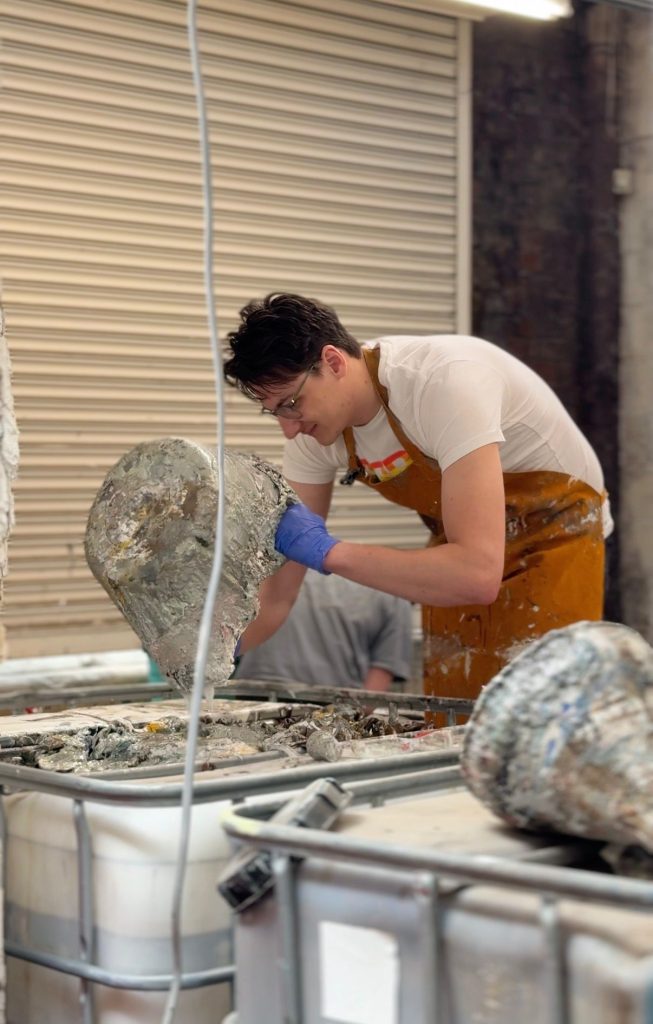
Whoever is is disposals will open each tin of paint, goggles and masks on (it can get smelly) and dispose of the off paint into a large container. We have one container for water-based paint, and one for oil-based.
An external recycling company collects these containers, meaning they can get disposed of correctly.
The plastic paint tins then get taken away by Forge Recycling, and we take metal tins to the scrap yard ourselves.
We took a trip last week, taking about 2 weeks’ worth of tins weighing just under a ton. We got £106 for this!